What is Off-Page SEO?
Content marketers and bloggers usually start with On-Page SEO. However, an important Google ranking factor is the backlinks from other websites that point towards your site. Off-page SEO is not just about building backlinks.
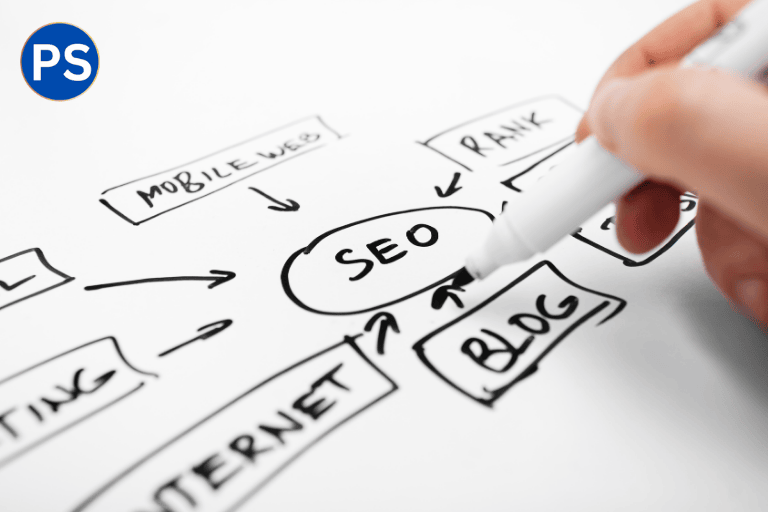
Off-page SEO, or off-site SEO, is a set of techniques that improve a website’s ranking on search engine results pages (SERPs) by building its authority and reputation outside of the website. This influences how people engage and discover your content.
Common tactics include local citations, encouraging branded searches, link building, social media sharing, and guest posting. Off-page SEO aims to get users and search engines to see your site as more authoritative and trustworthy. Off-page optimization improves the perception both people and search engines have of a site’s-
- Popularity
- Relevance
- Trustworthiness
- Authoritativeness
- Experience
- Expertise
Why is Off-Page SEO so important?
Off-page SEO is tremendously valuable as it tells the search engine that your website is more important than others on the web. By far, links are the most important off-page SEO signal as backlinks and other off-site signals form the foundation of Google’s algorithms. Sites having off-page SEO earn higher search engine rankings because of social media publicity, mentions, and backlinks.
Google measures off-page SEO factors like the quality and number of backlinks to websites. Every link you receive acts as an endorsement from another source that your site is quality. This allows external sources to act as tie-breakers for sites that have a similar quality of on-page SEO so that search engines are aware of the best ways to rank websites on SERPs. Using numerous off-page SEO factors, search engines understand how valuable pages are to the queries of the searchers and return relevant results accordingly.
Let’s share some reasons why Off-Page SEO is important-
Enhanced User Engagement
Off-page SEO activities like social media marketing encourage user interaction and engagement with your brand. This increases website visits, higher conversions, and longer sessions. When users engage with your content actively and share it with others, it improves your website’s authority and online visibility.
Increased Website Visibility
Off-page SEO techniques like influencer outreach and social media marketing, can expand the reach and visibility of your website significantly. Promoting your brand and content on external platforms helps attract a larger audience, enhance your online presence, and generate more organic traffic.
Building Online Reputation
Off-page SEO embraces managing your online reputation by monitoring as well as replying to customer feedback, mentions, and reviews. By actively maintaining a positive reputation and addressing customer concerns, you can establish credibility and trust with users and search engines leading to increased brand recognition and higher page ranking.
Improved Search Engine Rankings
Off-page SEO signals, especially backlinks from relevant and authoritative websites, endorse the quality of your website. Google values these endorsements by using them as an SEO ranking factor.
On-Page SEO vs Off-Page SEO:
According to SemRush, While off-page SEO refers to optimization tactics applied outside your website, on-page SEO refers to efforts applied on your web pages.
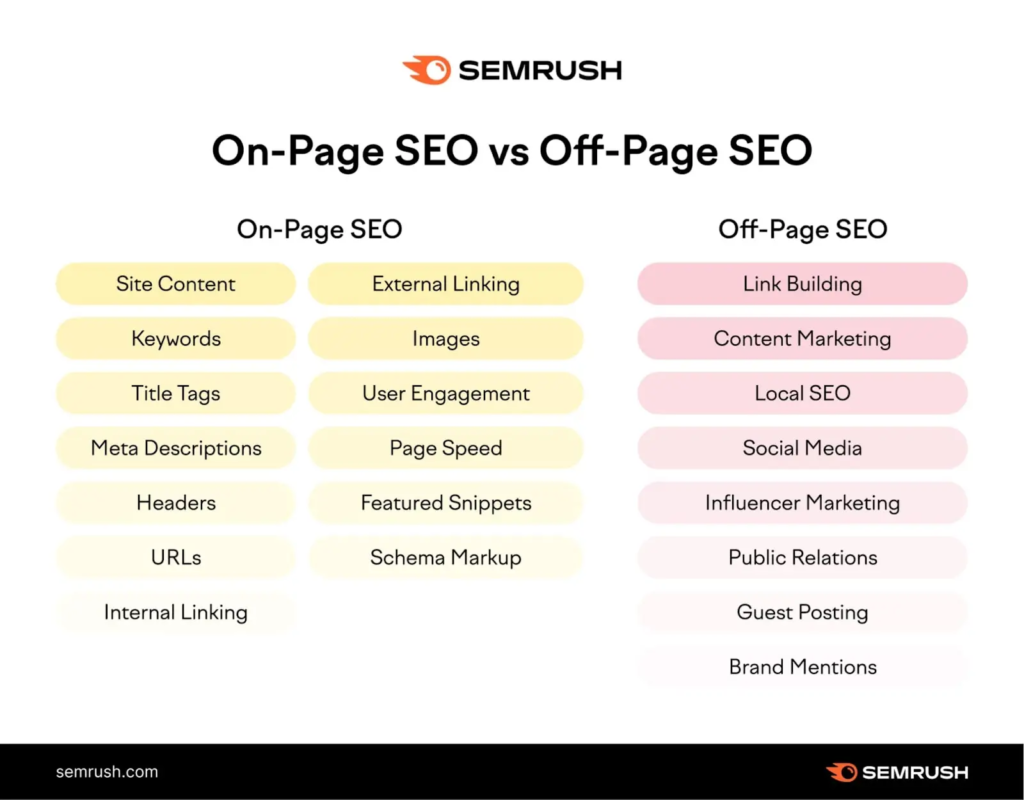
Image Credit: SemRush
Off-Page SEO techniques that work:
Now that we have explored the importance of off-page SEO, let’s delve into the different off-page tactics you can use to improve your site’s off-page SEO.
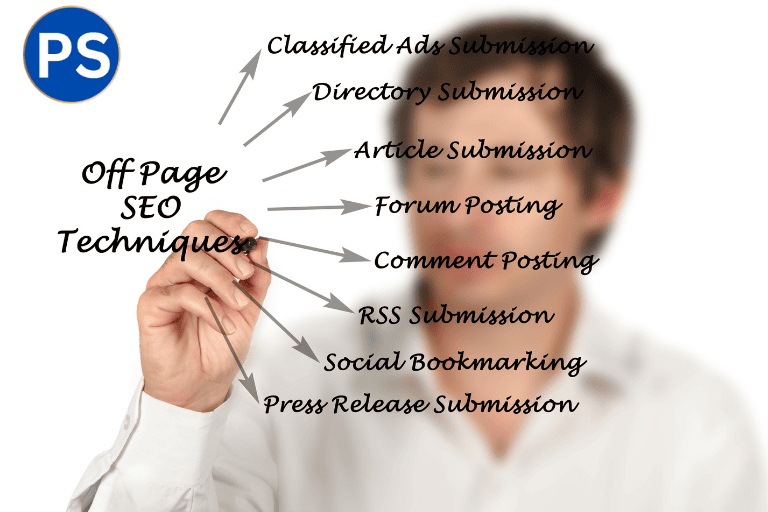
Link Building
The most famous off-page SEO technique is backlinking. This aims at generating natural links to your page. Link building improves your domain authority and drives traffic to your website. Links from reputable sites have a great benefit to your website. This is because links are the primary way of navigating the internet. Links enhance users’ experience.
Links are the simplest way to measure the trust, authority, and expertise of a site. High-quality links will tell Google that you have earned recognition and that your site knows its material, so Google will rank you higher. Build links so that you can have a significant presence online and reach people who will benefit from your product or service. While creating relevant and authoritative backlinks, make sure your link-building strategy aligns with the link-building guidelines from major search engines like Google.
Content Marketing
Creating high-quality content such as infographics, white papers, blog posts, and videos is quite an excellent way to attract natural links and clicks to your website. If your content is useful and interesting, natural links will come. Publish helpful content that can engage site visitors and also show Google that the content of your page showcases E-E-A-T (Experience, Expertise, Authoritativeness, Trustworthiness).
Experience
- Showcase certifications and awards
- Provide comprehensive case studies
- Document user success stories
Expertise
- Showcase credentials
- Guest post
Authoritativeness
- Build high-quality backlinks
- Engage in communities and industry forums
- Get Mentioned
- Collaborate with experts
Trustworthiness
- Secure your website
- Gather positive reviews
- Address negative feedback
- Maintain an updated privacy policy
- Br consistent
To reach more online users, distribute your content through the following-
Digital PR (Press Release)
Digital PR is a wonderful strategy for growing your online presence by establishing your trustworthiness and growing your online presence. It helps you earn backlinks. It involves crafting and distributing newsworthy information or announcements about your business to online platforms and media outlets. PR, when done effectively can yield several benefits like increased brand exposure and visibility, enhanced credibility and reputation, quality backlinks, and increased website traffic.
Influencer Marketing
Influencer marketing lets other people discover your business and drive more traffic to your site. Add a community-driven section to your post, reach out to famous influencers in your niche, and then request them to provide valuable insight via a review, a quote, or feedback. When the content is published, ask the influencer to share that within their circle. People enjoy what influencers think about things. This will allow you to build relationships with the influencers and also leverage their authority to increase your own.
Social Media Sharing
Social media improves your brand’s credibility, and the site’s discoverability, and increases the chances of earning backlinks. Social media marketing provides an excellent opportunity to expand your content reach. When you leverage social media into your SEO strategy, you get more clicks to your latest content and also obtain valuable backlinks from platforms containing high domain authority. Ensure that your social profiles reflect positively on your organization and its values. This can influence a user’s first impression greatly. Also, amplifying insightful content through various social media platforms like LinkedIn, Facebook, Twitter, and Instagram increases the visibility of the content and the likelihood of being linked and shared by others.
Guest Posting
Guest posting is a well-known off-page SEO strategy for writing as well as publishing content on someone else’s blog or website. It involves collaborating with other bloggers and website owners to contribute valuable posts or articles relevant to their audience. Apart from letting you reach new audiences and tap into an established audience, guest posting helps earn backlinks from reputable websites where you have contributed and boosts your authority on the topic. Search engines highly value backlinks from relevant and reputable websites as they indicate the authority and credibility of your site.
How to find Guest Posting Sites?
To find guest blogging opportunities that are relevant to you, try searching on Google with search operators like these:
- “your target keyword” + “write to us”
- “your target keyword” + “this is a guest contribution”
- “your target keyword” + “guest column”
- “your target keyword” + “guest post”
- “your target keyword” + “contributing writer”
- “your target keyword” + “contributing author”
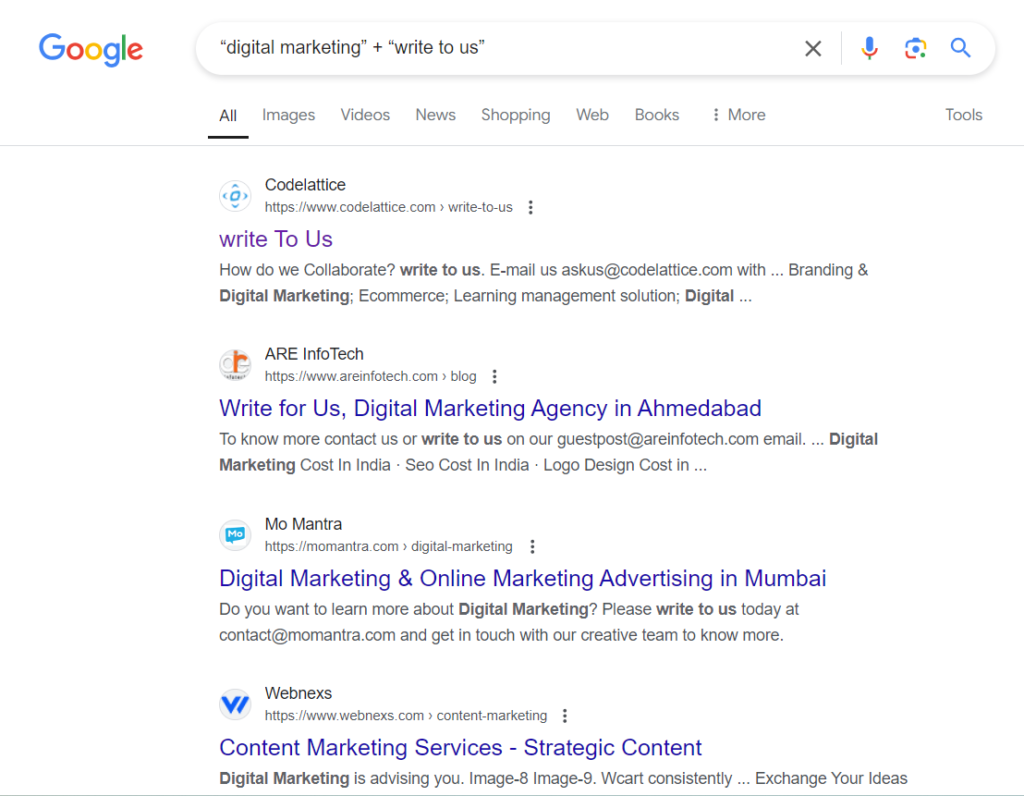
This will help you find guest posting websites.
Local SEO
Local SEO is a vital off-page SEO strategy that optimizes your online presence to enhance visibility in localized search results. It includes tactics and strategies to increase the visibility of your business to potential customers within a particular geographic area. It is valuable for businesses that serve customers in particular locations like businesses with multiple branches, service providers, or brick-and-mortar stores.
Consider the following strategies to effectively implement local SEO-
- Leveraging local link-building by associating with local organizations, participating in community activities, or sponsoring events.
- Optimise your website with relevant content and location-specific keywords
- If you have multiple business locations, create location-specific landing pages
- Manage and encourage customer reviews on the Google platform and industry-specific review sites.
- Build consistent citations across relevant online directories
- Claim and improve your Google My Business listing.
Journalist Requests Through HARO:
Journalists often need expert commentary or other brand assets (e.g., images) for their articles. If you can fulfil those needs, they may be willing to link to your site in return. Journalists’ requests can be found through some portals like HARO.
Brand Mentioning and Broken Link Building:
Broken link building is the process of finding relevant backlinks that don’t work properly and convincing creators to update them with links to your site. You can create a detailed blog to target that keyword.
Unlinked brand mentions are online references to your brand name that don’t include a link (e.g., “Prempal Singh” rather than “Prempal Singh”).
In many cases, publishers will be willing to add a link if you ask nicely enough.
Wrapping up,
Remember, off-page SEO is an ongoing process. It requires consistent adaptability and SEO effort. It is high time to get off your website and to network with other industry site owners and bloggers if you want to boost your search engine rankings. As you work hard to build and earn links, make sure to prepare your website to receive authority link juice. Creating high-quality content is the best SEO technique that can’t be overemphasized. If you are too busy with your business to focus on everything that goes into off-page SEO as well as measuring your SEO efforts, feel free to team up with SEO specialist Prempal Singh. Prempal Singh generates high-authority do-follow backlinks to improve website authority. He uses white-hat link-building strategies to enhance off-page optimization. So, go ahead and contact Prempal Singh to unleash the power of off-page SEO strategy to unlock new opportunities for the success of your website.